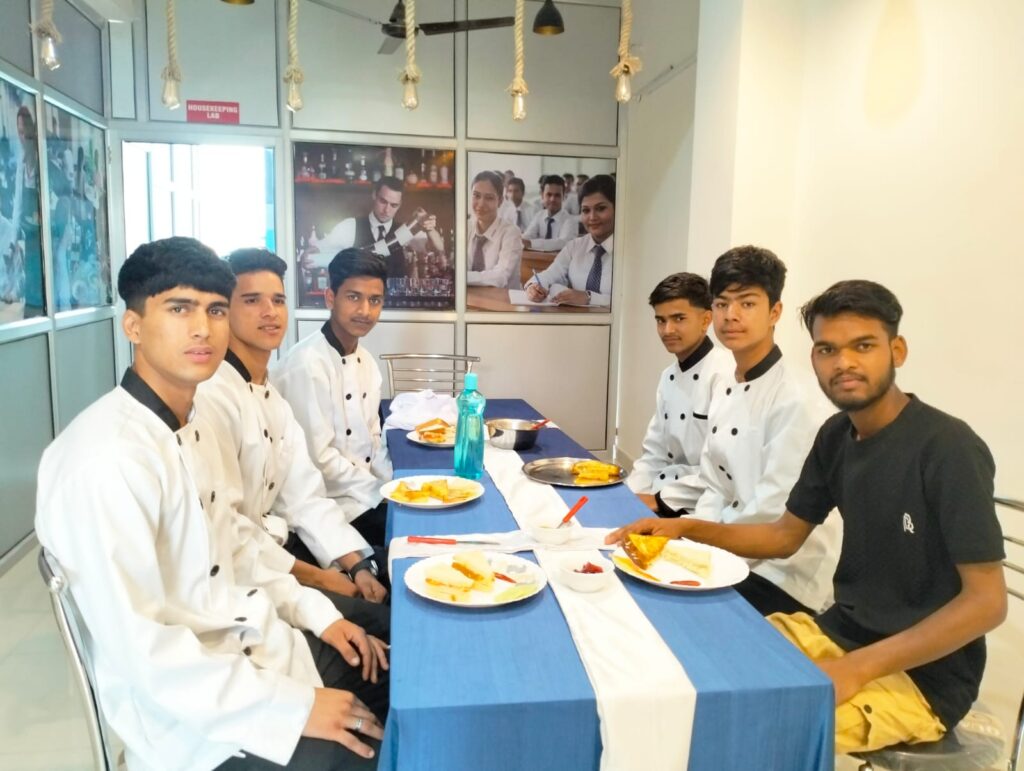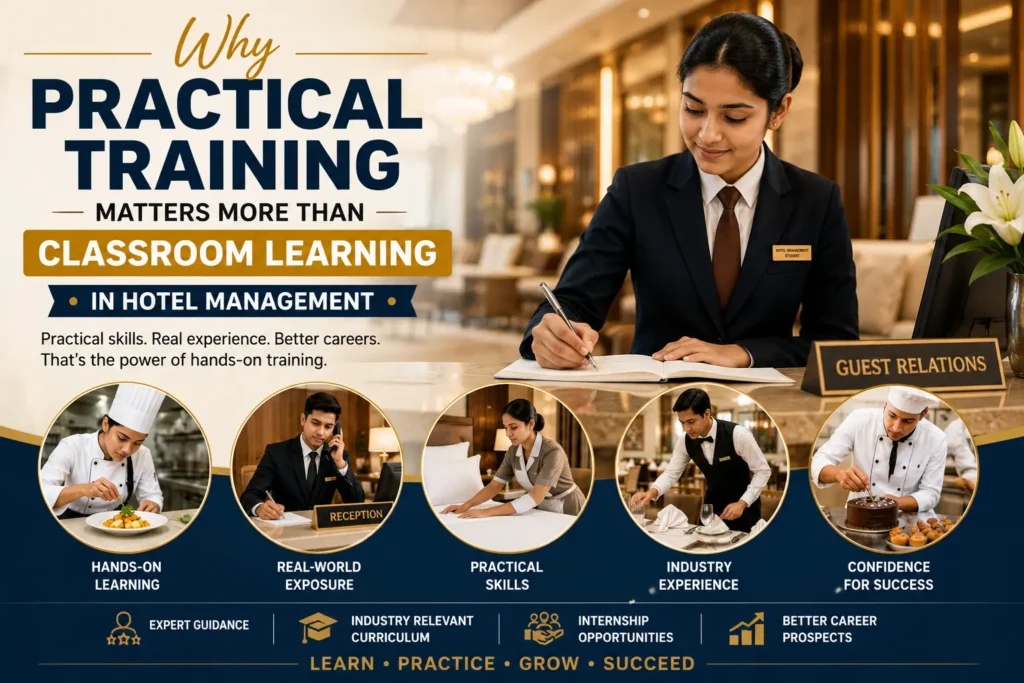
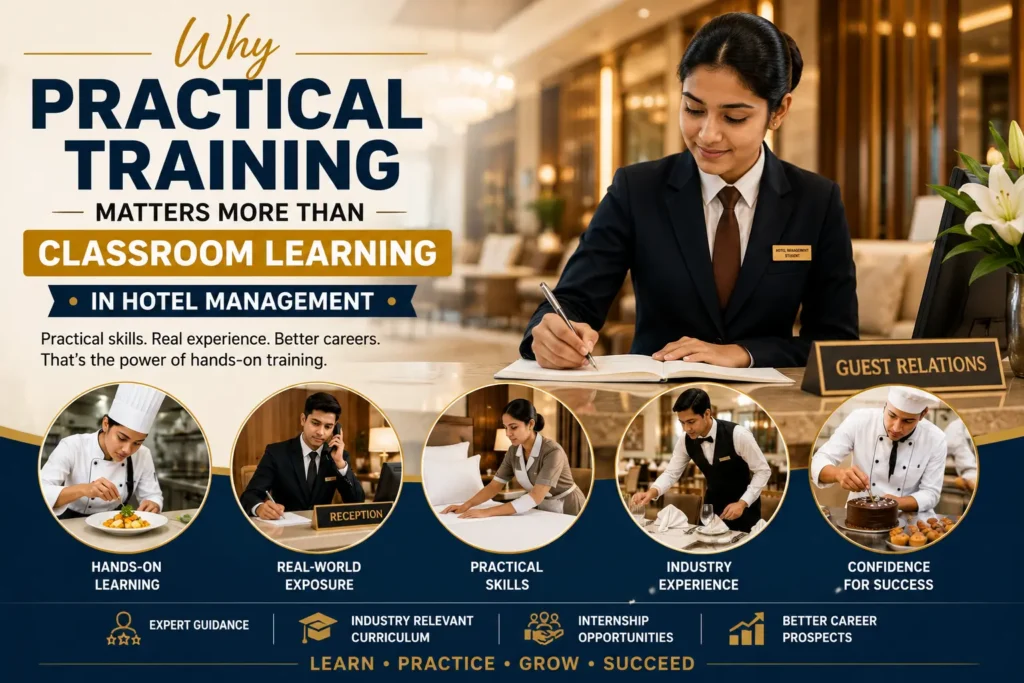
The hospitality industry is one of the few professions where knowledge alone is not enough, practical training in Hotel Management is one of the most important factors in building a successful hospitality career. Although a student may learn about hotel operations, customer service, food production, and hospitality management from textbooks, actual success comes from using that knowledge in practical settings
Consider two recent graduates in hotel management. Despite having a strong theoretical background, one has never worked in a professional kitchen, assisted with visitor check-in, or served customers during busy times. The other has taken part in practical sessions, finished internships, and gained real-world experience in several hotel departments. Which candidate do you think a five-star hotel would prefer?
The answer is clear.
Employers in the hotel industry today are searching for workers who are self-assured, flexible, and prepared to contribute instantly. They place equal importance on professionalism, problem-solving skills, teamwork, communication, and real-world experience as they do on academic achievement.
This is why practical training has become the backbone of modern Hotel Management course .
This blog will discuss the benefits of hands-on learning over classroom instruction, how it equips students for the real hospitality sector, and what prospective hospitality professionals should consider when selecting a hotel management institute.
What is Practical Training in Hotel Management?
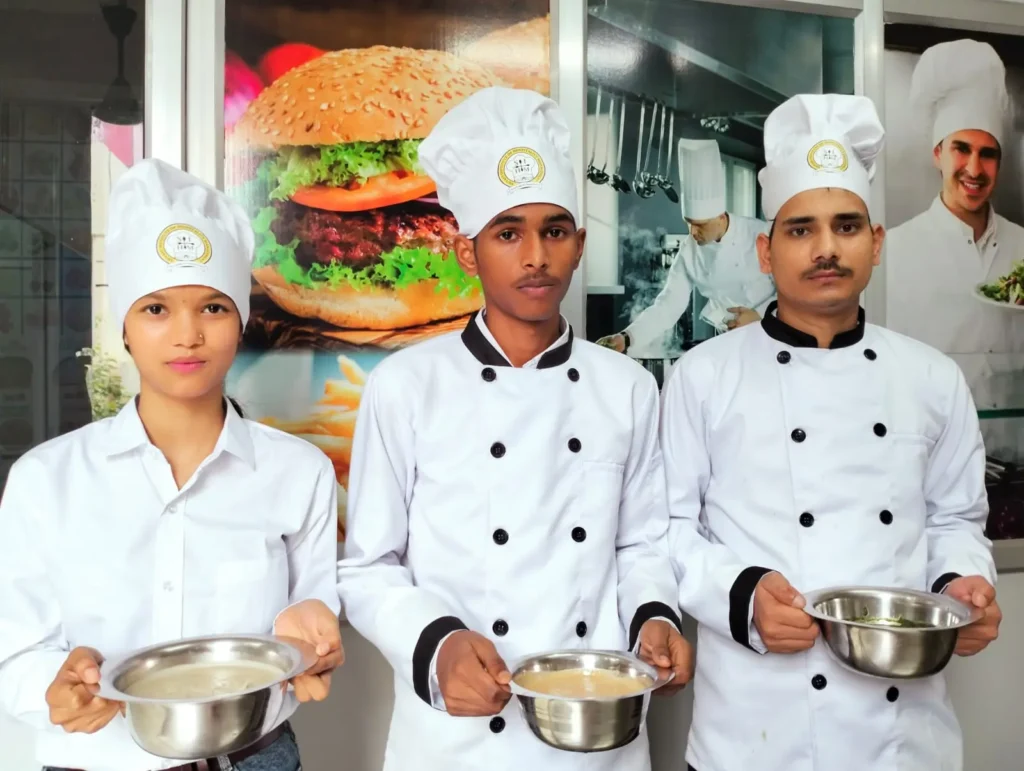
Practical Training in Hotel Management helps students understand how hospitality operations work in real-life situations. It bridges the gap between theoretical concepts and practical skills required in hotels, restaurants, resorts, and other hospitality organizations.
Practical learning includes:
- Food Production and Culinary Training
- Front Office Operations
- Food & Beverage Service
- Housekeeping Operations
- Bakery & Confectionery
- Guest Interaction
- Mock Hotel Operations
- Personality Development
- Communication Skills
- Industrial Visits
- Live Events
- Internships
Through these exercises, students learn how hotels operate and get the self-confidence necessary to interact with both visitors and co-workers. Unlike traditional classroom learning, practical training allows students to make mistakes, learn from experienced mentors, and improve continuously before entering the industry.
Why Practical Training in Hotel Management Is More Effective Than Classroom Learning
Classroom education provides the theoretical foundation of Hotel Management. Students learn subjects such as hospitality management, tourism, hotel accounting, food safety, housekeeping standards, communication, marketing, and customer service. Although this information is crucial but human interaction is the foundation of the hospitality sector.
No textbook is able to properly educate a student for circumstances like
- Handling an irritated client.
- Managing several check-ins during peak times.
- Meal preparation under time constraints.
- Coordinating with various hotel divisions.
- Responding calmly during emergencies.
- Providing individualized client experiences.
Confidence, fast thinking, teamwork, emotional intelligence, and practical skills are needed in these circumstances. Because of this, top companies in the hotel industry frequently check during interviews about internships, industrial training, and real-world experience additionally to academic credentials.
10 Reasons Practical Training Matters More Than Classroom Learning
1. Builds Real Industry Confidence
Since they have never worked in a professional hospitality environment, many students are hesitant when they start their first hotel jobs. This phobia disappears through hands-on training. Long before they graduate, students learn about hotel operations, guest interactions, and employment standards. Confidence is one of the biggest advantages practical learning provides.
2. Develops Communication Skills
Communication is the foundation of hospitality. Professionals deal with visitors, supervisors, co-workers, suppliers, and customers on a daily basis.
- Students gain knowledge through hands-on activities:
- Professional communication
- Guest handling
- Telephone etiquette
- Conflict resolution
- Active listening
- Team communication
Lectures in the classroom are insufficient to master these skills.
3. Enhances Problem-Solving Ability
Hotels operate 24 hours a day, Unexpected situations occur regularly.
Examples include:
- Guest complaints
- Last-minute modifications to reservations
- Delays in food service
- Emergencies in housekeeping
- Technical problems
Participating in practical sessions teaches students how to think fast, maintain calmness, and come up with workable answers. This skill is highly valued by employers.
4. Makes Students Job-Ready
Candidates that can contribute right away are preferred by recruiters. The gap between education and employment is lessened by practical training.
Students are already aware of:
- Hotel software fundamentals
- Standard operating procedures
- Coordination between departments
- Customer service approaches
- Business etiquette
5. Improves Teamwork
Hotels rely on teamwork. Coordination between the following is essential to a guest’s experience:
- Front Office
- Housekeeping
- Food Production
- Food & Beverage Service
- Sales
- Maintenance
Students learn how departments complement one another while working in groups during practical activities. In professional hospitality settings, this collaborative approach becomes quite valuable.
6. Helps Students Handle Real Guests
Handling real hotel guests is not the same as serving classmates during a practical session. Students are exposed to the following through industrial training and internships:
- Guest expectations
- Cultural diversity
- Professional behavior
- Customer satisfaction
- Service recovery
This experience develops professionalism and maturity.
7. Improves Personality and Grooming
In the hotel industry, a professional appearance is necessary.
The main objectives of practical training are:
- Grooming standards
- Body language
- Eye contact
- Professional posture
- Dress code
- Personal hygiene
During interviews and the hiring process, these attributes make a lasting impact.
8. Bridges the Gap between Theory and Practice
Theoretically, students could understand restaurant service. However, hands-on training teaches them:
- Setting up the table
- Presentation of the menu
- Techniques for serving
- Etiquette for fine dining
- Interaction with guests
What to do is explained by theory.
How to do it is taught through practical training.
9. Creates Leadership Skills
Students who engage in practical learning are inspired to:
- Lead teams
- Coordinate events
- Make decisions
- Delegate responsibilities
- Manage time effectively
Leadership abilities are essential for career growth in hotels and hospitality organizations.
10. Increases Placement Opportunities
Hotels often recruit candidates who demonstrate confidence during interviews and practical assessments. Students who have participated in workshops, internships, industrial exposure, and practical training typically stand out from other applicants. Placement prospects and career advancement are directly enhanced by this.
Practical Training in Hotel Management vs Classroom Learning
| Classroom Learning | Practical Training |
| Focuses on theory Uses textbooks and lectures Builds conceptual knowledge Limited industry exposure Academic assessment Explains hospitality | Focuses on application Uses real hospitality scenarios Develops professional skills Real hotel environment experience Performance-based learning Creates hospitality professionals |
The best Hotel Management course combines both approaches. Classroom learning builds knowledge, while practical training transforms that knowledge into professional competence.
Practical Learning Creates Industry-Ready Professionals
The hospitality sector is always changing due to new technologies, shifting client expectations, and international service standards. Employers now look for experts who can confidently provide outstanding guest experiences from their first day of work, rather than graduates who only grasp hospitality ideas.
By exposing students to real-world scenarios, operational difficulties, and professional standards, practical training helps close the gap between institute and employment. It helps in the development of technical proficiency, flexibility, and self-assurance—qualities that cannot be learned through textbooks alone.
The Role of Internships in Hotel Management
One of the most beneficial experiences in a hotel management course is an internship. It enables students to put all they have learnt in the classroom into practice in a professional hospitality setting.
Students become familiar to several departments during internships, including:
- Front Office
- Food Production
- Food & Beverage Service
- Housekeeping
- Sales & Marketing
- Banquets & Events
Students get an understanding of hotel operations, workplace discipline, guest expectations, and industry standards by working with seasoned experts. Additionally, it teaches time management, collaboration, communication, and flexibility—skills that employers often appreciate.
Internships are another recruitment tool used by many prestigious hotels. After completing their industrial training, students who do well are frequently given pre-placement offers or given consideration for full-time jobs.
When hotels recruit fresh graduates, they don’t simply look at academic marks. Their focus is on candidates who are ready to work in real hospitality environments.
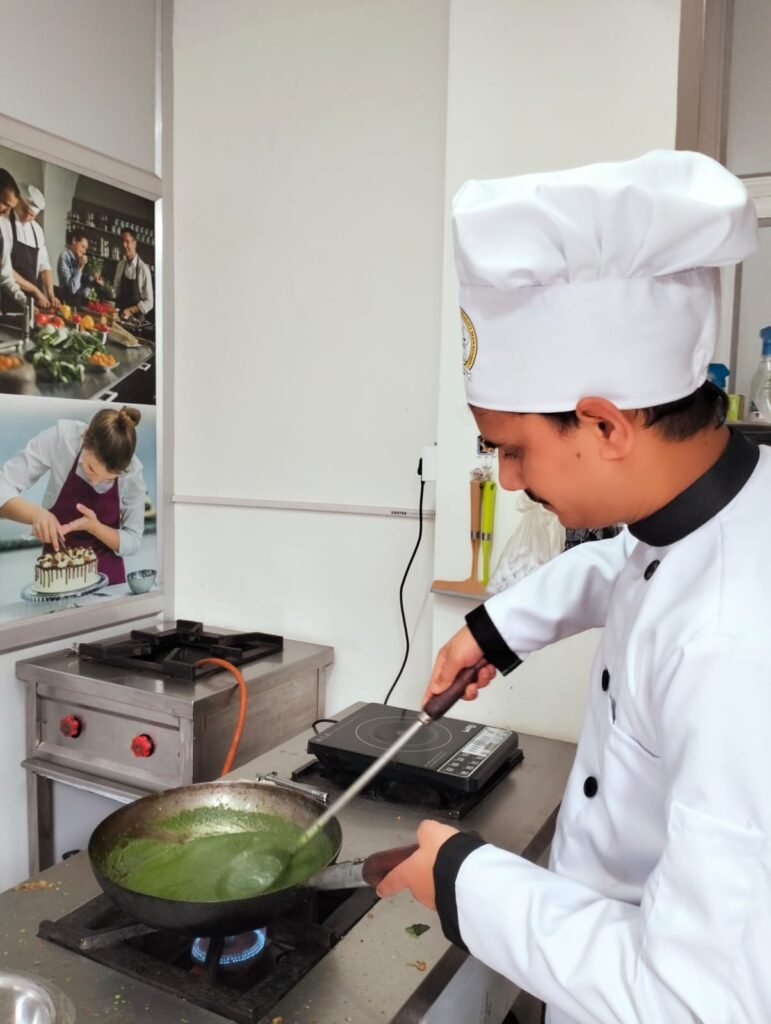
Classroom Knowledge + Practical Training = Career Success
The debate should not be about choosing one over the other. The best Hotel Management course combines classroom learning with practical experience.
Classroom learning helps students understand hospitality concepts, management principles, hygiene standards, marketing, accounting, and hotel operations. Practical training transforms that knowledge into professional competence.
When theory and practical learning work together, students become confident, skilled, and industry-ready.
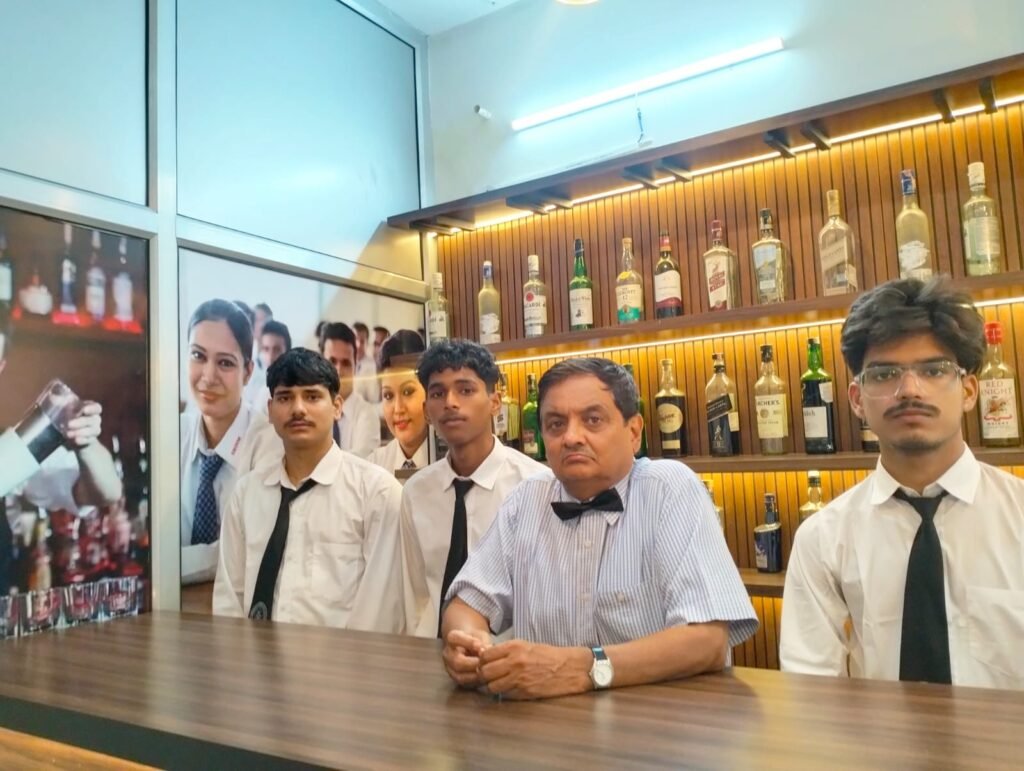
Why Choose Shivaay Institute of Hospitality Management?
Choosing the right institute can significantly influence your career journey. While theoretical knowledge provides a strong academic foundation, practical learning is what transforms students into hospitality professionals.
At Shivaay Institute of Hospitality Management (SIHM), Dehradun, the focus is on creating industry-ready graduates through a balanced approach that combines classroom education with hands-on training.
Key hospitality areas, such as Food Production, Front Office Operations, Housekeeping, Food & Beverage Service, and Bakery & Confectionery, provide students with hands-on experience. Frequent hands-on training helps students gain self-assurance, enhance their technical proficiency, and comprehend actual hotel operations.
In addition to academic learning, SIHM emphasizes:
- Practical skill development
- Personality development
- Professional grooming
- Communication and soft skills
- Industrial visits
- Hospitality workshops
- Internship opportunities
- Career guidance
- Placement assistance
This hotel management institute objective is not only to help students earn a qualification but also to prepare them for successful careers in hotels, resorts, restaurants, airlines, cruise lines, event management companies, and other hospitality sectors. Whether your career goal is to work as a hotel manager, executive chef, front desk manager, food and beverage manager, or hospitality entrepreneur, hands-on learning lays the groundwork for long-term success.
Final Thoughts
Hospitality is more than a profession—it is the art of creating memorable experiences. While classrooms help students understand hospitality concepts, practical training develops the confidence, professionalism, and real-world skills needed to succeed in this dynamic industry.
From mastering food preparation and front office operations to handling guest interactions and leading teams, every practical experience contributes to a student’s growth. The more exposure students receive during their course, the better prepared they are for internships, placements, and long-term career success.
If you are planning to pursue a career in hospitality, choose an institute that goes beyond textbooks and emphasises practical learning, industry exposure, and professional development.
Through hands-on training, knowledgeable instructors, internship opportunities, and industry-focused education, Shivaay Institute of Hospitality Management (SIHM), Dehradun, is dedicated to offering students a career-oriented course in hotel management. SIHM helps prospective hospitality professionals develop the confidence and skills required to succeed in the expanding hospitality sector in India and throughout the world by combining academic knowledge with practical experience.
Ready to begin your hospitality journey? Take a look at Shivaay Institute of Hospitality Management’s hotel management programs to start along the path to a fulfilling career based on professional excellence, practical skills, and lifelong learning.